Preventive maintenance planning for site plant
Admin · 22 October 2026
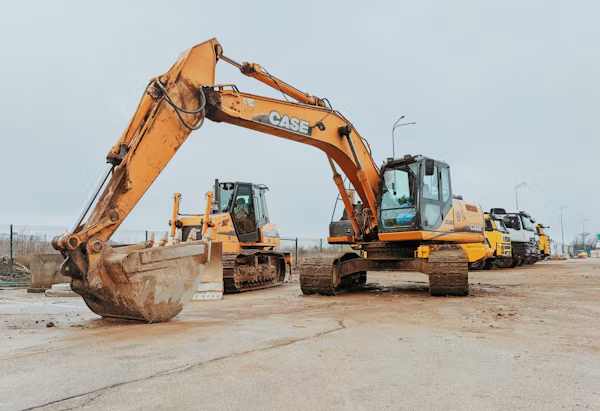 Illustrative image. Photo by Zizi zi on Unsplash. Unsplash License.
Preventive maintenance planning connects the needs of equipment with the programme that relies on it. The maintenance team may know an intervention is approaching while the delivery team assumes uninterrupted availability. If those views meet only when the machine must stop, the project has lost an opportunity to coordinate the work. A shared plan makes foreseeable interruptions visible early enough to organise an appropriate response.
The plan should be developed with competent maintenance personnel using the applicable manufacturer information and requirements. Project managers contribute the operational sequence, access and decision routes. They should not invent maintenance intervals or technical procedures to fit the programme. The aim is to coordinate the required work and its dependencies, with responsibilities clear across owners, hirers and users.
Establish the equipment baseline
Identify the equipment in use and the records that define its maintenance position. Link the item to a stable reference, supplier or owner and relevant deployment period. A fleet description is not enough if several similar machines have different histories. The responsible maintenance team needs the actual identity to determine the applicable work and evidence.
Check what information arrives with hired or transferred equipment and how the receiving team confirms its status. Missing information should be resolved through the proper process rather than treated as evidence that no action is due. Record the limitation and its owner. This prevents an apparently complete schedule from concealing an item whose requirements have not been established.
Define the competent maintenance input
Agree who determines the maintenance requirements and who is authorised to perform or arrange the work. The arrangement may involve the owner, hire supplier and site team in different roles. Clarify those responsibilities under the actual agreement. An assumed supplier obligation can leave a gap if the contract or operating arrangement places a relevant action elsewhere.
HSE’s maintenance guidance explains the importance of maintaining equipment and planning maintenance safely. The specific intervention, method and competence requirements need to be established by the responsible people. A programme entry or completed administrative checklist should not be presented as technical verification that those requirements have been met.
Connect triggers to current deployment
Record the information the maintenance team uses to identify approaching work, such as the relevant service basis or condition information. Keep the definitions with the schedule. Where operating data is required, confirm how it is collected and checked. An accurate interval is of limited use if the underlying readings are late or assigned to the wrong item.
Review the forecast when deployment changes. More intensive use, a transfer or a different work pattern may affect the expected timing of an intervention. The maintenance team should assess the consequence using its procedures. The project planner then needs a current view of availability rather than relying on the date first entered at mobilisation.
Reserve a realistic work window
Discuss the intervention with delivery managers before the equipment reaches the point at which action is required. Identify the operational effect and any preparation, access or support needed. The maintenance specialists determine the technical requirements, while the project coordinates the interfaces. A nominal window is not credible if the work cannot be accessed or supported during it.
Consider a hypothetical package using one critical machine across consecutive areas. The project may be able to align an intervention with an agreed transition, provided the maintenance team confirms the arrangement is appropriate. If that transition moves, the maintenance commitment must be reviewed explicitly. It should not silently move with the activity as though the requirement were optional.
Plan the supporting arrangements
Identify the parts, specialist attendance and other prerequisites needed for the intervention. Ask the responsible provider what must be confirmed and by when. Procurement should distinguish an enquiry from an accepted commitment. Preserve any qualifications in the schedule so that the delivery team understands the evidence supporting the expected return to service.
Coordinate access and site interfaces under the established procedures. Maintenance activity can involve people and resources not normally present at that work front. The responsible site and maintenance teams need to agree the arrangement, including communication with affected packages. A booking alone does not demonstrate that the technical and safety prerequisites are satisfied.
Separate planned work from fault response
Use a clear route for unplanned faults and condition concerns. They should not wait for a routine planning meeting merely because the equipment appears in the preventive schedule. The appropriate people need to assess the issue and decide the response under the organisation’s procedures. Keep the resulting availability information connected to the project programme.
When unplanned work occurs, record how it affects the planned maintenance position. The competent team should determine whether any scheduled work changes and update the relevant records. Avoid assuming that a repair automatically completes every service requirement. Clear records help the next team understand exactly what was done and what remains outstanding.
Make return-to-use status explicit
Agree how completion and the required release information are communicated to the people responsible for deployment. The project should know who confirms the appropriate status and where the evidence is held. An engineer leaving site is not necessarily the same event as every required check being complete. Use the terminology and authorisation process established for the equipment.
If the intervention reveals further work, update the forecast and notify affected teams promptly. Distinguish a confirmed return time from an estimate awaiting parts or assessment. The planner can then examine alternatives using an honest account of the uncertainty. An optimistic date repeatedly rolled forward can create more disruption than a clear explanation of what remains unresolved.
Keep a usable record across transfers
When equipment moves between projects, transfer the relevant maintenance information through the agreed process. Identify the work completed, current position and forthcoming requirements, with references to authoritative records. Do not rely on the receiving operator to reconstruct the history from scattered service stickers or informal messages.
Confirm responsibility during the transition. The sending site, transport arrangement and receiving site may involve different people and dates. Record who coordinates any requirement that falls near the move. This avoids an intervention being missed because both projects assumed the other would arrange it, or duplicated because the record was not accessible.
Review the quality of planning
Compare forecast and actual interruptions and investigate consequential differences. The issue may concern incomplete readings, late supplier commitment or an unsuitable work window. Use the evidence to improve the coordination process. Avoid evaluating success only by whether equipment stopped; planned maintenance can be an appropriate and necessary part of dependable operation.
At close-out, retain lessons relevant to future mobilisation and resource planning. A good preventive maintenance plan gives technical specialists the information and access they need while giving delivery teams a realistic view of equipment availability. It respects the requirements of the machine and turns them into coordinated project commitments rather than last-minute surprises.
Give the schedule a named coordinator and review the upcoming decisions with package leads. This simple ownership helps ensure that maintenance information reaches the people changing the work sequence and that operational changes reach the maintenance team in return.
Review the supplier’s service reporting format before the first intervention. The project should know which record confirms attendance, which describes work completed and which establishes the relevant equipment status. These may be separate documents. Agree how they reach the people who maintain the plant register and authorise deployment. A clear handover prevents an administrative delay from obscuring the actual position and helps the commercial team reconcile service charges against an understandable account of the work.














