Ground investigation procurement for development teams
Admin · 22 October 2026
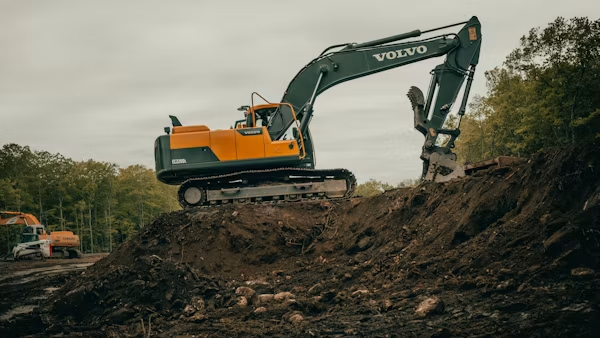 Illustrative image. Photo by Billy Freeman on Unsplash. Unsplash License.
A ground investigation should answer questions that affect the proposed development. Buying a standard package of exploratory work without first defining those questions can produce useful data while leaving important design or land decisions unresolved. For development teams, the priority is to commission appropriate specialist advice early enough for its findings to influence the scheme, procurement and programme.
The client does not need to design the investigation personally. It needs to appoint suitable expertise, provide relevant information and explain the decisions the work must support. The scope, methods and interpretation require competent specialist input appropriate to the site. A well-prepared procurement brief makes that input more effective by connecting the investigation to the project’s actual needs.
Define the decision being supported
Identify whether the current decision concerns land acquisition, feasibility, design development or construction planning. Each may require a different level of understanding. Explain the proposed development and the uncertainties that could change it. A specialist can then advise on the appropriate staged approach rather than being asked to price an arbitrary quantity of fieldwork with little context.
Record the questions in plain language alongside the technical brief. The team may need to understand constraints on a layout, obtain information for foundation design or assess an issue identified in historical records. Distinguish the desired decision from the investigation output. A report is a deliverable; the purpose is the informed choice or technical assessment it enables.
Compile existing information
Provide available site history, surveys, previous reports and relevant design proposals, identifying their source and limitations. Do not assume that an earlier investigation covers the current footprint, use or design question. Ask the appointed specialists to assess its relevance. Reusing suitable information can be valuable, but the project needs an explicit judgement about what it does and does not establish.
The government’s non-technical guide to HS2 ground investigations describes the role of examining soil, rock and groundwater before design and construction. It provides general context rather than a scope for every development. The current project’s site conditions and proposed works should determine the questions and appropriate specialist investigation.
Coordinate disciplines without assuming equivalence
A site may raise geotechnical, contamination, groundwater and other questions requiring different expertise. Establish who coordinates these inputs and how the scope addresses their interfaces. One investigation activity may contribute information to several assessments, but that does not mean every required assessment is included automatically. Clarify responsibilities and deliverables before comparing proposals.
For land contamination, the Environment Agency’s LCRM risk assessment guidance provides relevant context for a staged, risk-based process. Its application depends on the site and regulatory setting. The client should obtain appropriate advice rather than treating a generic article or a previous project’s scope as sufficient for its own circumstances.
Prepare a complete tender basis
Give bidders enough information to explain their proposed approach, assumptions and exclusions. Identify required reports, data formats, meetings and liaison responsibilities. Where the scope is to be developed by the specialist, ask for the reasoning and the information needed to finalise it. The comparison should consider the proposed work’s suitability, not merely the total price.
State which access, permissions and site arrangements the client expects to provide and which the supplier must address. Ask the relevant advisers to clarify the actual obligations. Fieldwork can be delayed when the parties have different assumptions about access windows, welfare or reinstatement. Those matters should be visible in the procurement record rather than discovered during mobilisation.
Plan the investigation as work
The investigation itself requires appropriate planning and controls. Identify the relevant site information, interfaces and safety responsibilities through the project’s arrangements and competent advice. Existing services, ongoing operations and other site conditions may affect the approach. The management team should ensure these questions reach the responsible specialists; it should not improvise field instructions.
Ask the supplier to explain the sequence and information dependencies in its proposal. Include mobilisation, site activities, laboratory or other analysis where applicable, interpretation and report delivery. A short fieldwork period does not necessarily mean the complete decision-support information will be ready immediately afterwards. Establish the actual route and the assumptions behind the dates.
Align outputs with design decisions
Discuss the programme with the designers who will use the results. Identify which information they need first and which decisions must wait for interpretation. Interim data may be useful within a defined scope, but its limitations should remain clear. Do not pressure recipients to treat incomplete information as a final conclusion simply because the wider design programme needs an answer.
Consider a hypothetical development where a procurement milestone precedes the planned final report. The team could review whether the investigation sequence or procurement timing should change, with specialist input on what can responsibly be established earlier. The decision should reflect the actual evidence available and the consequences of proceeding on an assumption.
Make limitations usable
Ask the specialist to explain consequential limitations in terms the development team can understand, alongside the technical detail. Which areas or questions remain uncertain? What further work could be required if the scheme changes? Where is the information intended to be used? Clear answers help project leadership avoid presenting investigation findings as a guarantee of uniform conditions across the site.
Retain the connection between the report and the development basis used when it was prepared. If the footprint, loading assumptions or use changes materially, obtain the appropriate review of relevance. A report does not become universally applicable because it concerns the same address. The project needs to know when a design change triggers another specialist assessment.
Control additional work
Agree how the supplier will raise the need for further investigation or a changed scope. Identify the information required for approval and the people who can make the decision. Some findings may legitimately require a revised approach. The commercial and programme process should allow the team to understand that need without allowing unrecorded commitments to accumulate.
Record the reason, scope and authority for an approved change, following the actual appointment. Keep the updated programme and deliverables consistent with it. This provides a clear account of what the client commissioned and helps distinguish new findings from a failure to provide an originally agreed output.
Transfer findings into project management
Arrange a review with the relevant designers and project team once the findings are available. Identify the decisions supported, implications for the scheme and remaining actions. Update the appropriate risk and information records. A technical report left in a document repository does not by itself ensure that its conclusions influence procurement or construction planning.
Preserve the final data and reports in the agreed project record, with clear status and access for authorised users. Review what the procurement process achieved and which questions emerged late. The successful outcome is a better-informed development decision and a traceable account of the evidence used, with specialist responsibilities and remaining uncertainties understood before the next commitment.
Check how the evidence will be used
Ask the designers and procurement team to explain the decisions they intend to make from the investigation. This can reveal a mismatch between the commissioned scope and the expectation of its users. Resolve that mismatch with the specialist before treating the deliverable as adequate for every proposed purpose. Where an adviser identifies a limitation, keep it visible in subsequent decision papers. The development team should not remove qualifications from a management summary merely because they are inconvenient to the preferred programme. A clear explanation of the remaining uncertainty allows the client to choose further work or a conditional next step knowingly.














