Buy or hire: structuring a construction equipment comparison
Admin · 22 October 2026
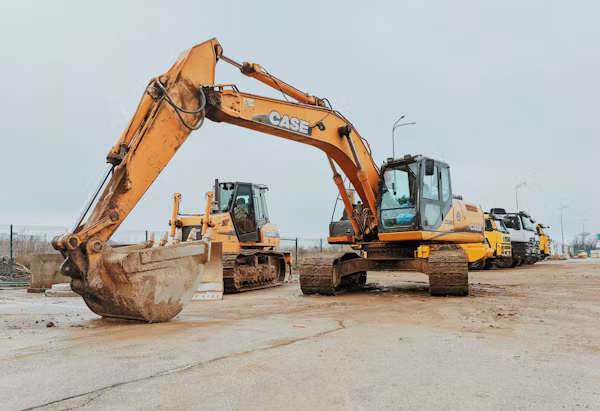 Illustrative image. Photo by Zizi zi on Unsplash. Unsplash License.
The decision to buy or hire equipment depends on more than comparing a purchase price with a weekly rate. Ownership creates responsibilities for storage, maintenance, allocation and eventual disposal. Hiring creates its own commitments around availability, collection and the terms of use. For a contractor, a useful comparison describes these arrangements against a realistic pattern of work rather than assuming that every available day will be productive.
The exercise should support a defined investment or procurement decision. Identify the equipment capability needed, the projects expected to use it and the period under consideration. The appropriate technical team should establish suitability before the commercial alternatives are compared. There is little value in calculating a precise ownership cost for an item that does not meet the actual operational requirement.
Agree the common requirement
Describe the task, operating environment and required configuration. Establish which accessories and support services are necessary and which remain optional. Both purchase and hire options need to address the same scope. A comparison between a fully supported hire package and a bare machine purchase will mislead unless the additional ownership arrangements are identified explicitly.
Check whether the proposed item can serve the expected range of projects. The business may have several similar tasks with materially different constraints. Record where the capability is transferable and where another arrangement would be required. Do not assume that a machine’s availability within the fleet makes it suitable for every project that needs equipment in the same broad category.
Build an evidence-based demand forecast
List the anticipated periods of use and distinguish committed work from possible opportunities. Identify overlaps, gaps and transfers between sites. The forecast should reflect mobilisation, maintenance and the time needed to move equipment, not simply add together programme durations. Where the pipeline is uncertain, show that uncertainty rather than treating every prospect as confirmed demand.
Review the forecast with project and resource managers. They can explain whether the planned activities are likely to require the equipment continuously or intermittently. An item booked to a project for several months may still have substantial periods without a suitable work front. Understanding that pattern is necessary before using utilisation assumptions in a commercial assessment.
Identify ownership responsibilities
Ask who would manage the item if purchased. Include responsibility for records, appropriate maintenance and inspection arrangements, transport coordination and storage. These are operational questions as well as cost questions. A business with an established fleet support function may have a different starting point from a contractor purchasing an unfamiliar specialist item for one project.
Obtain appropriate advice on the associated financial treatment, funding and commercial commitments. The project team’s comparison should provide clear operational assumptions for those advisers rather than implying that it replaces their assessment. Record what is included in the proposed purchase and what further expenditure or service arrangement would be required before deployment.
Define the hire alternative completely
Request a hire proposal that reflects the expected configuration, period and movement between sites. Identify the rate basis, transport arrangements, support and relevant conditions. Clarify what happens when the project programme changes. The buyer needs to understand the actual commitment and availability rather than using a generic advertised rate as the entire basis of comparison.
Check the responsibilities retained by the hirer. Hiring an item does not make every issue somebody else’s responsibility. HSE’s equipment guidance explains that hire organisations and users can have responsibilities according to their control over equipment. The actual operating arrangements need competent review; the commercial choice alone does not establish how those responsibilities will be discharged.
Use consistent cost boundaries
Set out the categories included in each option and identify the source of each figure. Relevant items may include acquisition or hire charges, support, transport, storage and the work needed to administer the arrangement. Avoid double counting services already included in a quotation. Equally, do not omit an activity because it is carried out by an internal department rather than separately invoiced.
Distinguish confirmed quotations from estimates and assumptions. A future disposal value, for example, is uncertain and should not be presented as guaranteed income. The relevant financial reviewers should determine how to handle timing and other financial considerations. The operational team contributes by explaining the expected use, condition and practical disposal arrangements on which the estimate depends.
Test plausible scenarios
Compare how the options respond if demand differs from the central forecast. What happens if a project starts later, another opportunity is not secured or two sites need the equipment simultaneously? Use scenarios connected to the actual pipeline rather than arbitrary changes selected only to make one option look attractive. Explain which assumptions most influence the result.
A hypothetical regional contractor may expect one machine to serve three sequential projects. If the second start moves, the business could face both idle ownership time and a later overlap with the third project. Hiring might offer a different response, subject to availability and terms. The comparison should show these consequences clearly without assuming that either route eliminates uncertainty.
Consider resilience and support
Ask how each option responds to a breakdown or an unexpected change in requirement. Identify the proposed support route, likely dependencies and evidence available from the supplier. Avoid treating a service promise as a fixed recovery time unless that is actually established in the arrangement. The project needs a credible response plan and an understanding of its limitations.
For ownership, consider whether the business can arrange appropriate replacement cover when necessary. For hire, examine whether a replacement configuration would need another suitability review. These questions may affect both programme and operational continuity. Include the relevant delivery managers in the discussion so that resilience is assessed against the work rather than as a generic benefit.
Document the decision and conditions
The recommendation should identify the preferred route, evidence used and material uncertainties. Record any conditions, such as confirmation of future workload or establishment of a support arrangement. Name the owner and deadline for each condition. A decision that depends on an unresolved assumption should not be described as unconditional approval to proceed.
Use the organisation’s actual authority and procurement processes. If the purchase is approved, the implementation plan should cover the operational responsibilities identified in the assessment. If hire is selected, confirm that the agreed scope and dates match the reviewed proposal. The quality of the comparison matters only if the resulting arrangement reflects the decision.
Review the result using actual use
Track the information that will allow a later review: deployment periods, transfers, support events and the reasons for inactivity. Keep the data proportionate and connected to existing records where possible. Do not label every idle period avoidable; some may be an intentional consequence of protecting an essential operation or maintaining availability under the agreed plan.
At the review point, compare experience with the original assumptions and explain significant differences. The lesson may concern forecasting, site readiness or supplier arrangements rather than the choice to buy or hire itself. A repeatable comparison helps the business learn from its own work and make future equipment decisions on clearer evidence, with operational responsibilities understood alongside the numbers.
Preserve the version of the comparison used for approval. Later changes in rates, workload or support arrangements should be recorded as new information, not silently substituted into the original assessment. This allows the business to distinguish an unreasonable assumption at the time from a reasonable assumption overtaken by events. The distinction improves future forecasting and makes the review fairer to the people who prepared the recommendation using the evidence then available.














