Buildability reviews: involving site teams before tender
Admin · 22 October 2026
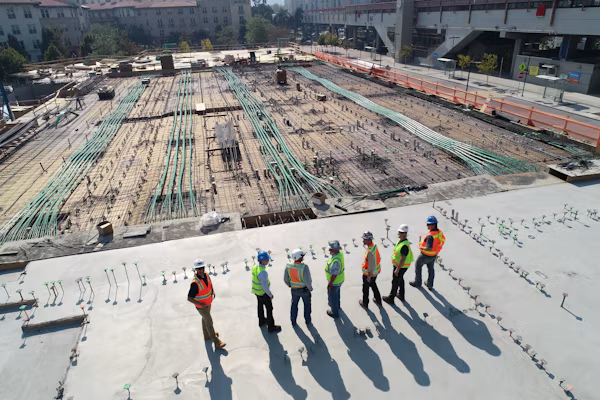 Illustrative image. Photo by Scott Blake on Unsplash. Unsplash License.
A design can satisfy its intended function while leaving difficult questions about how the work will be delivered. Access may be assumed, installation space may be untested and the sequence may depend on information that is scheduled too late. A buildability review brings practical delivery knowledge into those questions before tender commitments become fixed. Its purpose is to identify and assess issues, with the relevant specialists retaining responsibility for technical decisions.
For clients and design managers, involving site teams means more than inviting an experienced manager to comment on a drawing. The review needs a defined scope, suitable information and a route for acting on findings. Otherwise it can produce a list of concerns that never influences the design or procurement documents. The value lies in the decisions made while alternatives remain available.
Choose the questions that matter
Start with the aspects of the project most likely to create delivery difficulty. These may include constrained access, unusual interfaces, occupation during works or a sequence involving several specialist packages. Define the questions the review should answer. A focused discussion of how a particular area can be accessed and handed over is more useful than a general request to assess the entire project in one meeting.
Link the review to upcoming commitments. Identify which tender package, design release or procurement decision could be improved by its findings. This gives participants a practical deadline and helps the team prioritise issues. A review held after the relevant information is issued may still reveal useful matters, but implementing them can require a more complicated change process.
Bring the right delivery knowledge
Select participants with experience relevant to the proposed work and environment. A manager familiar with open new-build sites may offer useful general observations but may not have detailed knowledge of a constrained refurbishment. Include specialist input where the installation method or manufacturing process is central to the question. Be explicit about the limits of the advice available.
Give participants the brief, current design information, available surveys and known restrictions before the review. Identify what is provisional. Delivery advice based on an assumed site condition should carry that qualification into the findings. Where a site visit or further investigation is necessary, record it as an action rather than allowing the review to create an impression of certainty unsupported by evidence.
Walk through the sequence
Discuss the work in the order it is expected to happen. Ask what must be available before each significant operation and what the activity leaves for the next team. Identify information, access, space and predecessor requirements. The aim is to reveal dependencies that may be difficult to see when drawings are reviewed discipline by discipline.
Use an appropriate visual aid, such as marked-up plans or a simple sequence diagram, where it helps participants understand the proposal. The sophistication of the visual is less important than the accuracy of its assumptions. A detailed animation should not be treated as proof that the method has been fully assessed. The responsible people still need to review the actual constraints and requirements.
Test movement and working space
Consider how materials, equipment and people reach the relevant work areas under the project’s planned arrangements. Identify where storage, handling and installation demands may conflict. The review should direct questions to the appropriate logistics and technical specialists; it should not improvise lifting or temporary works instructions. Record the evidence needed to establish a suitable arrangement.
A hypothetical project might place a large services component in a room that becomes enclosed early in the sequence. The review can identify the need to examine delivery timing, access and future replacement with the relevant teams. The resulting decision may influence the sequence or design. What matters is that the issue is resolved deliberately rather than discovered when the component arrives.
Examine interfaces between packages
Ask what each trade expects others to provide before it begins. Identify supports, openings, setting-out information and handover conditions where relevant. A package boundary can appear clear commercially while remaining unclear in practical delivery. The review should expose those assumptions and assign the questions to the people responsible for resolving them.
Pay attention to work that becomes difficult to inspect or alter once another activity proceeds. The relevant quality and technical teams should define the required checks and evidence. Include those dependencies in the proposed sequence and information requirements. This helps the tender documents describe a deliverable arrangement rather than leaving essential coordination to be inferred by bidders.
Keep operation and maintenance in view
Buildability should not end with the installation route. Ask whether the proposed arrangement preserves the access and operational requirements in the brief. A solution that makes installation convenient may create difficulty for the team maintaining the asset. Involve the operator where appropriate and record which requirements need further technical assessment.
Where the project remains occupied, clarify the assumptions about working areas, temporary arrangements and continuity of activity. Obtain the client’s input rather than relying on a construction team’s guess about what disruption is acceptable. Distinguish a proposed arrangement from one that the operator has reviewed and agreed through the appropriate route.
Turn findings into decisions
Record each finding with its location, information reference, consequence and owner. State whether it is an observation, an option for investigation or a decision requiring approval. Avoid broad actions such as resolve buildability. The owner needs to know what evidence or revised information will close the issue and when the affected tender package requires it.
Evaluate alternatives across the relevant disciplines. A change that simplifies one trade’s work may affect performance, scope or another package’s sequence. The design team should assess those consequences through the project’s established processes. Site experience is an important input, but it does not remove the need for technical verification or the client’s approval where requirements change.
Reflect the outcome in tender information
Identify which findings need to appear in drawings, specifications, scope descriptions or other issued information. A tenderer cannot reliably price an arrangement known only to the review participants. Ensure the current information communicates the relevant requirements and responsibilities, while following the project’s procurement and contractual procedures.
The Construction Playbook and its associated supply chain engagement material provide public works context for involving delivery expertise early. This review sequence is a suggested management approach. The appropriate engagement model and treatment of supplier input depend on the project’s actual procurement arrangements and should be considered by the responsible team.
Follow through into mobilisation
Hand the consequential findings to the appointed delivery team, including assumptions that remain open. Distinguish requirements incorporated into the agreement from ideas that were explored but not adopted. Personnel changes can otherwise cause the project to repeat earlier discussions or assume that every reviewed option was approved.
During delivery, compare significant findings with what happened on site. Note where early input improved the sequence and where an important issue was missed. Use that evidence to refine future reviews, including participant selection and timing. A useful buildability process produces a more informed tender basis and a clearer route to construction, with uncertainties assigned to people who can resolve them before the work depends on the answer.
Keep the review’s coverage explicit. List the areas and interfaces examined, together with significant exclusions. This helps later reviewers avoid assuming that an unmentioned detail has been assessed and found acceptable. Where a topic was outside the participants’ expertise, identify the additional review needed and assign it to the appropriate owner before the relevant release of information.
Include unresolved findings in the next review agenda. This provides a direct check that the earlier exercise has influenced the work rather than simply producing another report for the project archive.