Cross-functional collaboration between design and site teams
Admin · 22 October 2026
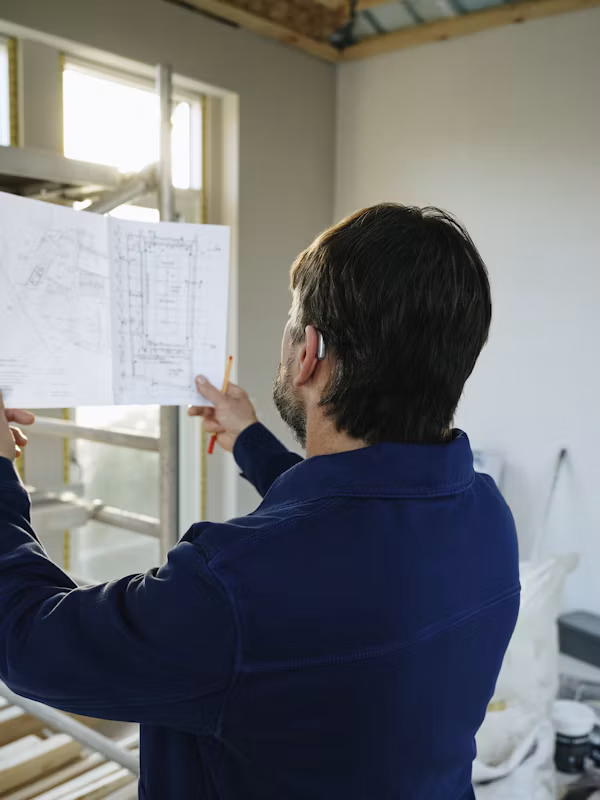 Illustrative image. Photo by GN Group on Unsplash. Unsplash License.
Design and site teams depend on one another’s information, but they may organise their work around different immediate pressures. Designers need clear requirements and coordinated inputs; site teams need usable information at the point the sequence requires it. Collaboration improves when those dependencies are explicit and the teams have a practical route for questions, decisions and feedback.
The objective is not to remove professional responsibilities or replace formal processes with informal goodwill. It is to make the interfaces work. A clear collaboration arrangement explains who supplies information, how uncertainty is raised and how an agreed response reaches the documents and people affected. That gives the project a more dependable connection between design intent and delivery.
Begin with the shared delivery sequence
Review upcoming packages and the information each needs before procurement or construction commitments. Ask designers and delivery managers to identify dependencies together. A drawing issue date should be connected to its intended use and review needs. Otherwise the design team may meet its schedule while the site still lacks a complete information set for the activity.
Distinguish preliminary input from information suitable for the next commitment under the project’s procedures. The site needs to understand the permitted use, while designers need to know what decision the recipient is about to make. This shared context reduces the risk of provisional information being treated as authority to proceed beyond its intended purpose.
Make questions precise
A useful query identifies the location, information reference and uncertainty, with the consequence for the work. Broad requests to resolve the design leave the recipient to discover the actual issue. The site team should explain what it needs to decide and by when. Designers can then assess the question with an understanding of its practical significance.
Provide relevant evidence without burying the question in a large collection of unrelated attachments. Current photographs or marked-up information can help where appropriate, subject to the project’s controls. Keep observations distinct from proposed solutions. A site suggestion may be valuable, but the responsible competent team still needs to assess its technical and interface implications.
Identify the response owner
Some questions cross disciplines or packages. Name the person coordinating the response and identify the contributors. A query sent to several organisations without an owner can remain open because each believes another will assemble the answer. The collaboration process should make that coordination responsibility visible without redefining the underlying professional duties casually.
Check that the response owner has access to the necessary information and decision authority. If the answer depends on a client choice, identify the route and date for that decision. Designers should not be expected to resolve an operational priority that the client has not established. The project manager can help connect the question to the appropriate decision maker.
Use focused interface reviews
Bring the relevant people together around a specific area or dependency where interaction will help. Define the outcome and provide current information before the review. A broad meeting in which every discipline reports progress may miss the interface that needs a decision. Focused preparation gives participants a better chance of resolving the actual problem.
A hypothetical services route affects structure, architectural space and installation access. The review should identify what each discipline needs and which specialist assessments remain. The meeting can coordinate the route to a decision without assuming every participant has authority to approve the whole solution. Record the outcome and the formal steps still required.
Connect informal discussion to controlled information
Conversations can clarify a question quickly, but consequential outcomes need to reach the appropriate records. APM’s configuration management overview provides context for current information and traceability. The project should know which revision reflects the agreed position and what remains provisional.
Assign responsibility for updating affected documents and communicating the release. A helpful sketch or email should not become the only account of a changed requirement if the project’s process requires revised information. Track the follow-through so procurement and installation teams are not left relying on a different version from the designers.
Agree how the teams will handle a question whose urgency changes. A query may become consequential when the programme moves, even if its original required date was later. The site should explain the new dependency, and the response owner should assess the effect on its commitments. Record the revised priority through the established process rather than rely on repeated informal reminders. This keeps the conversation tied to evidence and gives management a clearer basis for resolving competing demands.
Make review time realistic
Agree the information and time required for responses through the actual appointments and project arrangements. A date labelled urgent does not create the missing assessment capacity. Explain the consequence and involve management where prioritisation is needed. The planning process should expose predictable needs before they become emergency requests.
When a query arrives later than expected, investigate why. The cause may be a changed sequence, an earlier information gap or a task not previously identified. Use that evidence to improve coordination. Blaming the response time alone may leave the upstream condition unchanged and produce the same urgent request on the next package.
Handle alternatives through the right route
Site experience can reveal a more practical way to achieve the required outcome. Ask for a clear proposal, its reason and the affected work. The relevant designers, specialists and client representatives should assess consequences through the project’s processes. An alternative should not be rejected merely because it originated on site, or accepted merely because it appears convenient.
The APM change control overview provides general context for assessing changes to an approved basis. The actual authority to alter scope or instruct work depends on the project arrangements. Keep that distinction visible so collaboration supports governance rather than bypasses it.
Share delivery evidence constructively
Provide designers with factual feedback about the implications of their information in use. Explain the location, conditions and result rather than offer a broad criticism that the design is unbuildable. The designer can then assess a defined question and the team can identify whether the issue concerns design, sequence or another interface.
Invite feedback from designers about the quality and timing of site inputs. Collaboration is not a one-way demand for faster answers. A site record may omit a critical dimension or reference, making a response less reliable. Improving the input can be a more effective action than adding another escalation meeting.
Maintain continuity when people change
Introduce incoming participants to the current interface arrangements, open issues and decision routes. An organisation’s continuing appointment does not mean each new representative knows the history. Provide concise current records and identify the questions requiring immediate attention. This helps avoid unnecessary reopening or accidental reliance on superseded assumptions.
Review the process after major packages. Identify where joint review improved a decision and where a handover remained unclear. Turn the finding into a specific change to information planning, query preparation or responsibility allocation. A general instruction to collaborate better is unlikely to alter the next exchange.
Effective collaboration gives design and site teams a shared understanding of the decisions their information supports. It makes dependencies visible, preserves technical responsibilities and carries outcomes into controlled records. With those foundations, the project can use both design expertise and delivery experience more consistently as the work develops.
Keep a small number of consequential interface actions under active review until the agreed evidence is available. Closing the conversation is different from completing the information change on which another team depends.
Give each unresolved interface a next review date so the project checks progress before the affected commitment becomes urgent.














