Landscape and drainage design interfaces
Admin · 22 October 2026
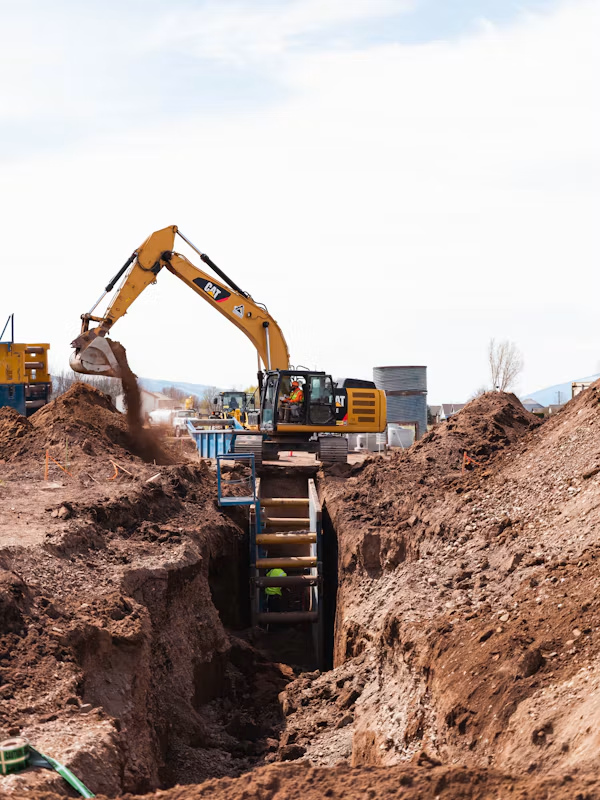 Illustrative image. Photo by John Kakuk on Unsplash. Unsplash License.
Landscape and drainage decisions share the same physical space, yet they can develop in separate conversations. Levels, routes, planting and maintenance requirements may be agreed within one discipline without a complete view of the others. The resulting conflict is often discovered when the project has limited room to change. Coordinating the interface early gives the relevant specialists an opportunity to assess a coherent site arrangement.
For clients and design managers, the task is to establish shared information, responsibilities and decision points. This article addresses that management process rather than technical drainage design. The responsible designers must determine the appropriate system, performance and safety requirements for the actual site, with the relevant professional advice and approvals.
Start from the same site evidence
Identify the surveys, reference levels and other information used by each discipline. Record revisions and limitations. Existing data may not cover every area or current condition, so the team should identify further investigation needed for its advice. A shared drawing base does not establish that all underlying information has been verified for the intended use.
Ask the designers to identify information they need from each other. The exchange should include required dates linked to meaningful decisions. A landscape layout may depend on a drainage strategy, while that strategy needs information about the proposed site arrangement. The design manager should coordinate the sequence rather than leave both teams waiting for a complete input from the other.
Agree scope and responsibilities
Review the appointments and package boundaries with the appropriate technical and commercial teams. Identify who designs the relevant elements, integrates the interfaces and provides the information needed by others. Broad scope descriptions can leave details unassigned. Resolve those gaps through the project’s actual procedures instead of assuming that the discipline nearest the issue will take responsibility.
Include later specialist and supplier contributions in the plan. If a particular element is not yet selected, record the interim assumption and the person responsible for confirming it. The receiving designers should understand what can be relied on and what may change. This helps prevent a provisional arrangement becoming a fixed constraint simply because it appears on several successive drawings.
Bring the strategy into the site layout
Ask the relevant specialists to assess the relationship between drainage, landscape, access and other site functions. Their advice should identify the significant interfaces and any choices requiring client input. The coordination process should not reduce the task to placing features in whatever space remains after other decisions are made.
The national standards for sustainable drainage systems provide non-statutory guidance for England, with their stated scope and limitations. Other jurisdictions and local requirements need appropriate consideration. The project’s advisers should establish what applies to the site rather than treat one document as a universal specification for every development or retrofit.
Review levels and routes together
Changes to the external layout can affect several disciplines. The responsible teams should identify the consequences of proposed level or route changes through competent assessment. Record the information and decisions needed, including any wider site relationship. An isolated amendment may appear minor while altering the basis on which another designer developed its proposal.
Consider a hypothetical commercial development where a revised entrance arrangement changes the surrounding landscape layout. The team should assess connected drainage and access questions before issuing a new plan as coordinated. The appropriate specialists determine the solution. The management task is to identify the interfaces and ensure that the relevant assessments reach the decision before the work is committed.
Include planting and long-term care
Ask how the proposed planting and landscape management relate to the selected drainage arrangement. The relevant designers should identify requirements, dependencies and information needed by the future operator. Avoid assuming that a visually integrated scheme automatically has a workable maintenance plan. The client needs to understand the activities and resources the completed arrangement expects.
Bring the party responsible for maintenance into the review where possible. Their input can reveal access or operational concerns while the design can still respond. Where responsibility is undecided, record that question and its decision owner. A design may be technically assessed yet remain operationally incomplete if nobody has accepted the required management role.
Coordinate with services and structures
External spaces may also contain utilities, foundations or other infrastructure. Ask the relevant disciplines to identify consequential interfaces and the evidence needed to assess them. The coordination record should distinguish verified information from assumptions about existing services or ground conditions. Detailed presentation does not remove uncertainty about what lies outside the available evidence.
Define the information handovers between designers and suppliers. A later selection can change dimensions, requirements or maintenance assumptions. Assign responsibility for identifying those changes and reviewing their effect. The team should not rely solely on a final visual coordination exercise to detect a consequential difference already embedded in procurement information.
Plan construction and phased handovers
Discuss how the relevant systems and landscape areas will be delivered, with input from the appropriate construction and technical teams. Phasing may create temporary conditions that need assessment. The project should identify who designs or manages those arrangements under the actual scope and procedures. This article does not provide construction or drainage instructions.
Link the sequence to inspections, verification and the readiness of connected work as determined by the responsible specialists. A programme should expose significant dependencies rather than show every external package proceeding independently. Where occupation begins before all areas are complete, identify the arrangements requiring client agreement and the evidence needed before the handover.
Control design changes across documents
When the layout changes, identify the drawings, schedules, specifications and calculations requiring review or revision. Assign the work and track the response. A revised landscape plan can otherwise coexist with an earlier drainage reference used by another team. The project needs a known information set for each consequential release.
Keep decisions linked to their reasons and supporting advice. If an option is rejected, retain a concise explanation. A later reviewer can then identify whether circumstances have changed enough to justify reconsideration. This is more efficient than repeatedly debating an arrangement without access to the evidence behind the original choice.
Make acceptance and ownership clear
Agree the completion evidence and receiving responsibilities through the relevant technical and contractual processes. Administrative handover of a folder is not the same as confirmation that the arrangement meets its requirements. Identify who reviews the information and who will manage any outstanding items, with conditions stated clearly.
Provide the operator with the records and guidance required by the agreed scope, reflecting the completed arrangement and consequential changes. Test whether the receiving team can locate the information it needs. A coherent handover connects the design intent, installed evidence and maintenance responsibilities rather than leaving them in separate uncoordinated files.
The interface works best when the teams share a reference basis, understand their dependencies and involve the operator early. Landscape and drainage can then be assessed as connected parts of the site, with decisions supported by the appropriate expertise and preserved through procurement, construction and ongoing management.
When a development is divided into packages or phases, retain an integrated view of the external arrangement. Each supplier may understand its own boundary while an interface remains unassigned between them. Ask the responsible designers and project managers to identify who maintains that overall view and how package changes reach the other contributors. Keep significant decisions in a shared controlled record so that the landscape, drainage and operational information do not gradually diverge as separate teams develop their work.
Review those shared records at consequential package releases, not only at the final coordination meeting.














